Section 179 versus bonus depreciation in 2026: when to expense, when to depreciate, and when to do both
100% bonus depreciation is back. The math on when Section 179 still wins, when bonus is the better tool, and how producers are stacking them on 2026 equipment purchases.
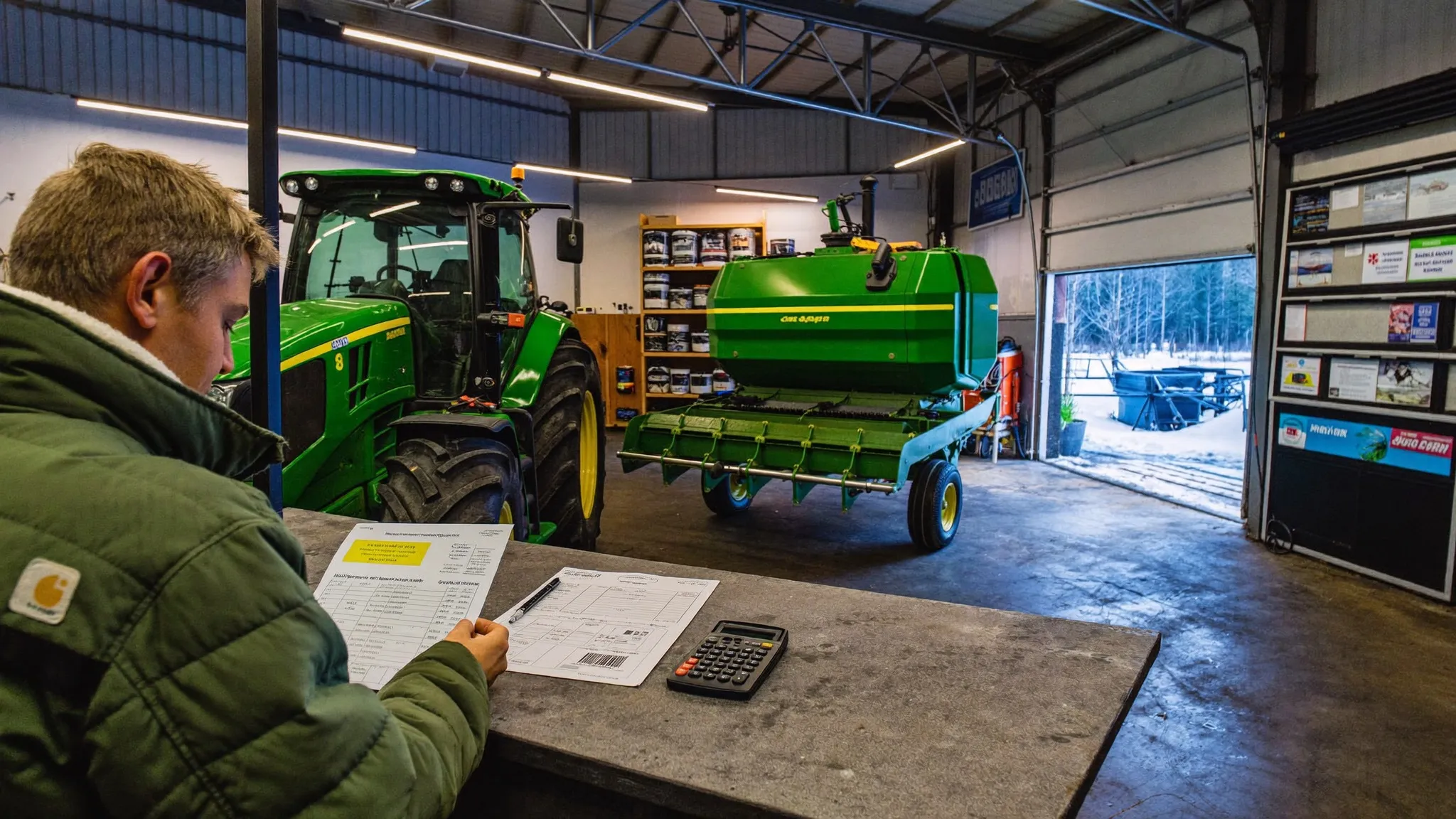
The 2026 tax planning landscape for farm equipment looks different than it has in either of the last two years, and the change is worth working through carefully before the equipment-buying calendar closes. The One Big Beautiful Bill Act reinstated 100 percent bonus depreciation for qualifying assets placed in service after January 19, 2025, which restores a tool that had been phasing down since 2023. Section 179 remains in place, with a 2026 cap of $2,560,000 and a phase-out beginning at $4,090,000 of total qualifying purchases.
Both tools accelerate depreciation. They are not the same product. The choice between them — or, more commonly, the way they get stacked together — is one of the more consequential tax decisions on a 2026 equipment purchase.
The mechanical difference
The two provisions look similar on the surface and operate differently in the actual tax return.
Section 179 allows the producer to expense the cost of qualifying equipment in the year placed in service, up to the $2.56 million cap, but the deduction is limited to taxable income from the operation. A producer with a small income year cannot use 179 to push the operation into a loss — the deduction is capped at whatever taxable income remains after other deductions. Unused 179 carries forward.
100% bonus depreciation allows the same first-year write-down on qualifying equipment, but is not limited to taxable income. Bonus can create or deepen a net operating loss, which can then be carried forward (under post-TCJA rules) to offset future taxable income. This is a meaningful structural difference.
For most producers in a normal income year, the two tools produce identical first-year tax outcomes on the same purchase. The difference shows up at the edges — small income years, large income years, and multi-year tax planning.
When Section 179 wins
Section 179 is the better tool when the producer wants precise control over how much of a purchase to expense in the current year. The election is asset-specific and amount-specific — a producer can elect to 179 a portion of a purchase and depreciate the remainder under normal MACRS schedules. That granularity matters for operators trying to land taxable income at a specific level, often for self-employment tax planning, social security earnings calculations, or AGI thresholds tied to other programs.
Section 179 also remains useful for state tax planning. A handful of states do not conform to federal bonus depreciation rules, and Section 179 conformity at the state level is broader. For producers in non-conforming states, the federal-state tax answer can differ meaningfully depending on which tool is used.
When bonus depreciation wins
100% bonus is the better tool in three situations:
Large income years. If the producer is sitting on a strong taxable income and a major equipment purchase, bonus depreciation can absorb the full purchase against current income without any income-cap limitation. Section 179 caps out at taxable income; bonus does not.
Strategic NOL creation. Producers who expect a meaningfully softer year following a strong income year can intentionally use bonus depreciation to push the current year into a net operating loss, then carry that loss forward to offset income in the softer year. This is multi-year tax planning that requires a clear projection, but it can level out tax liability across cycles in a way that ratable depreciation cannot.
Used equipment purchases at scale. Both Section 179 and bonus depreciation cover used equipment under current law, but bonus is generally more flexible at scale for producers buying multiple used pieces in a single year.
The stacking that most producers actually use
The most common 2026 tax answer on a meaningful equipment purchase isn’t picking one tool — it’s stacking them. The typical sequence:
- Apply Section 179 first, up to the producer’s taxable income limit, on the assets where 179 is the most efficient match.
- Apply 100 percent bonus depreciation to the remaining purchase amount, which absorbs any balance against current income or creates an NOL for future use.
- Track the resulting basis adjustments carefully — both provisions reduce the asset’s depreciable basis to zero in year one, which means no remaining depreciation in future years and a meaningful tax bill on any future sale of the asset.
The third point is the part producers most often underestimate. A combine fully expensed in 2026 carries a zero tax basis. When that combine is traded or sold in 2030, the entire trade or sale value is recaptured as ordinary income. The tax acceleration is real, but so is the future-year liability.
A worked example
Consider a 1,500-acre corn-soy operation purchasing a new $400,000 combine and a $150,000 used tractor in 2026, with projected taxable farm income of $325,000 before any depreciation election.
Without acceleration: Standard 7-year MACRS depreciation on $550,000 of equipment yields a year-one deduction of roughly $79,000, leaving taxable income near $246,000.
With stacking: Apply $325,000 of Section 179 (capped at taxable income), absorbing the full income to zero. Apply 100 percent bonus depreciation to the remaining $225,000, creating a $225,000 net operating loss available to carry forward against 2027 income.
The 2026 federal tax bill drops from whatever the $246,000 income would have generated to zero, and the operator banks a $225,000 NOL against the next year. Net present value of the tax shield is meaningful, particularly when 2027 income is projected to be strong.
Before signing on the equipment purchase, run the actual payment through a monthly payment calculator for farm loans at the proposed rate and term — the tax benefit is real, but it doesn’t change the monthly cash obligation, and a payment that overhangs the operating cash flow is still a problem regardless of the depreciation answer.
When neither tool is the right answer
Two situations call for ratable MACRS depreciation rather than acceleration.
Income smoothing for off-farm program eligibility. Producers whose AGI affects eligibility for FSA programs, conservation payments, or other USDA initiatives sometimes find that absorbing income to zero in a single year is counterproductive — the program-eligibility loss outweighs the tax benefit.
Pass-through entity planning with multiple partners. In multi-partner LLCs or partnerships, the allocation of accelerated depreciation can create disproportionate basis effects that complicate future buy-out or estate planning.
For most single-operator or single-family operations, those edge cases don’t apply. For more complex structures, an enrolled agent or CPA conversation should precede any large 2026 election. A network of lenders that underwrite farm cash flow and the accounting professional ecosystem around them generally understand these mechanics — the producers who get them wrong are usually the ones working from generic small-business tax guidance that doesn’t account for farm-specific facts.
The bottom line
2026 is a year where producers have both tools available at meaningful scale for the first time since 2022. The right answer for most operations is to stack them — Section 179 first against income, bonus depreciation on the remainder for current absorption or NOL creation. The wrong answer is to default to one or the other without working through the multi-year tax picture. The decision sits inside a 12-month tax window, but its effects on basis and future-year taxable income run for years.