Iowa farmland values hold at $13,200/acre — for now
Cash rents and operating margins have tightened, but institutional demand is keeping bids firm on quality ground.
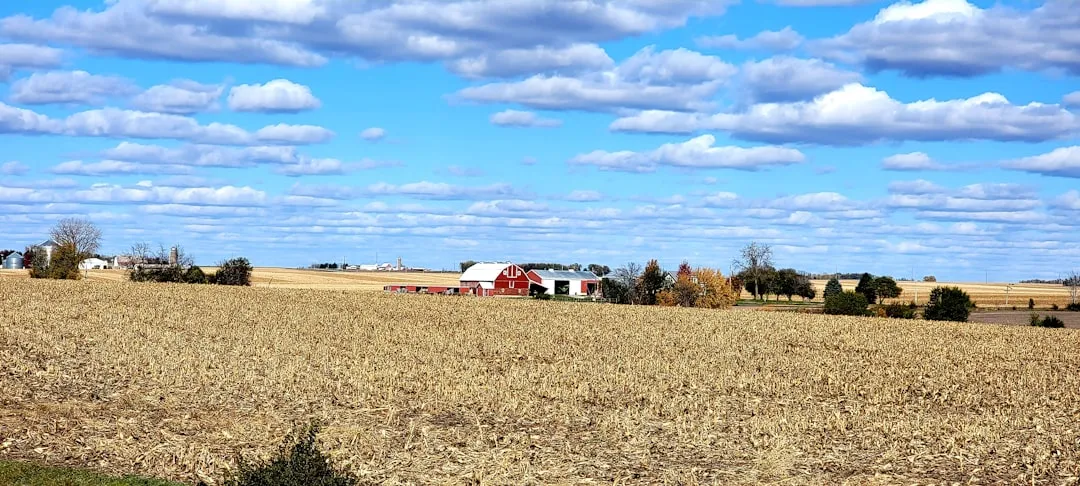
Iowa farmland values averaged $13,200 per acre in the Iowa State University Land Value Survey released this week, unchanged from the record set in August and up 2.1% from the same point a year ago. The headline stability masks meaningful divergence by ground quality and region: top-rated corn-ground in northwest Iowa held at $16,400/acre or better, while lower-productivity ground in the southern tier softened 3–5% from earlier in the year.
The persistence of high values against a backdrop of tighter operating margins reflects the continued presence of institutional and non-farm buyers in Iowa land auctions. Land investment funds and farmland real estate investment trusts absorbed roughly 18% of the acres that traded in Q3 2025, according to Farmers National Company data — a share that has been growing steadily since 2022 and that provides a price floor that pure operator demand would not sustain at current commodity prices.
Cash rent math is the stress point
The pressure is showing up more clearly in cash rent negotiations than in sale prices. With corn futures at $4.20–$4.40 per bushel and input costs still elevated, operators bidding on new cash-rent ground face a margin squeeze that is forcing hard decisions about which acres are worth retaining.
A reasonable cash-rent breakeven for corn in the current environment — accounting for seed, fertilizer, chemicals, fuel, equipment ownership, and a modest operator return — runs $220–$240 per acre on average-productivity ground in central Iowa, assuming corn at $4.30 and a yield of 200 bushels per acre. Established cash rents on that class of ground are commonly $240–$270/acre, meaning many operators are at or below breakeven on rented acres. Some are absorbing the loss in order to maintain operating scale; others are passing on renewals.
The acres that will move in 2026 are the ones where landlords got used to above-market rents during the 2022 boom and haven’t recalibrated. Those negotiations are happening right now.
Where values are most likely to soften
Agricultural land economists at Iowa State and the Federal Reserve Bank of Chicago have both flagged the same concern: if corn and soybean prices remain in their current range through spring 2026 without a significant input cost decline, the gap between farmland values and agricultural earnings capacity will have widened to levels not seen since 2014–2015. The correction in that cycle was gradual — about 15% over three years — not abrupt.
The trigger to watch is interest rates. The 10-year Treasury yield at current levels makes farmland’s capitalization rate — the ratio of net rental income to land price — relatively unattractive compared to other income-producing assets. As long as rates stay elevated, the bid from non-farm buyers is price-sensitive rather than unconditional. A meaningful rate move down would strengthen non-farm demand; a move higher would soften it.
Practical guidance for buyers and sellers
Operators currently evaluating whether to buy ground should run the math at $4.00 corn and $9.50 soybeans — not at current prices. That stress-tests the acquisition against a down year without assuming catastrophic conditions. If the cash flow works at those prices with a 30% down payment and a 30-year land loan at current rates, the acquisition is probably defensible. If it only works at current prices, reconsider.
Sellers in the current market are in a position where patience still pays. There is no indication of a near-term value collapse, and the spring auction season — when operator buying interest typically peaks — is four months away. Operators who are sellers should be talking to FSA about potential CRP enrollment on marginal acres as an alternative to a sale in a soft market.