Drought-year operating credit in 2026: what to draw, what to wait on, and when to call USDA
When the crop short-pays and the operating line is already drawn, the next financing decisions matter more than the original ones. The emergency credit options for producers facing a drought-year cash gap.
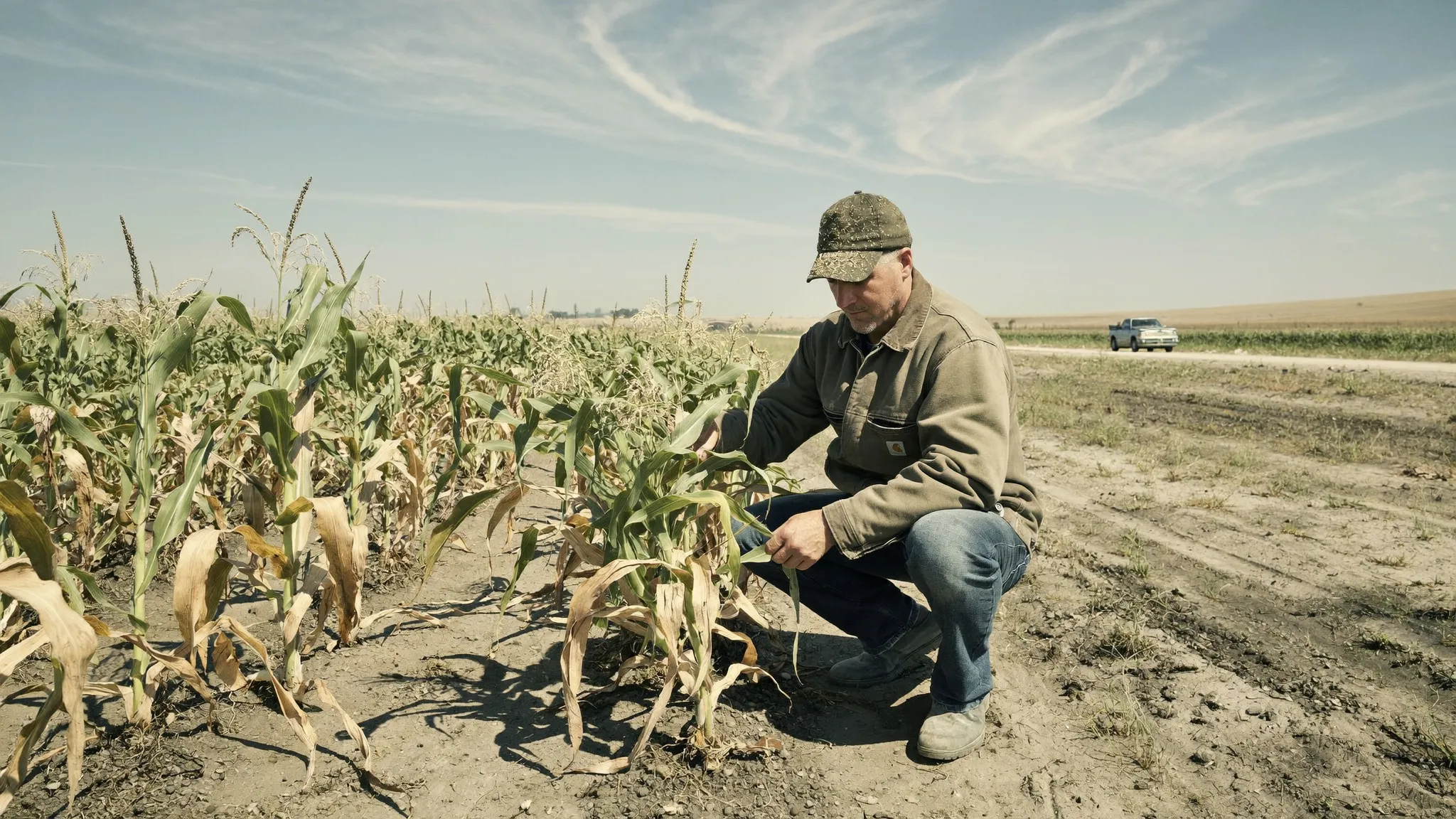
A drought year creates a specific kind of cash-flow problem that other tough years don’t. Input spend is already in the ground by the time the dry pattern sets in. Operating capital that was sized against an expected yield is exhausted on a crop that short-pays. Crop insurance proceeds, when they come, take months to settle. The operator is sitting on a balance sheet that has already paid for the crop and now needs to fund the fall, the winter, and the next season’s preparation from a revenue picture that hasn’t materialized.
For producers staring at that gap in 2026, the financing options are real but they sequence in a specific order. The mistakes operators make in a drought year are almost always about pulling the wrong lever in the wrong order — drawing expensive credit early when patience would have unlocked cheaper capital, or waiting too long to engage USDA when the timeline was the binding constraint.
The USDA Emergency Loan program
The USDA Farm Service Agency administers Emergency Loans for producers in counties declared eligible for disaster assistance. The program is structurally cheap — interest rates in 2026 have been running in the high-3 to mid-4 percent range, meaningfully below any commercial alternative — and the loan can fund production losses, real estate losses, or essential operating expenses.
The catch is timeline. Emergency Loans require a disaster declaration in the operator’s county, which can lag the actual weather event by weeks or months. Application-to-funding for the program has historically run 60 to 90 days even after declaration, and the documentation requirements are real. For producers facing a fall cash-flow gap from a summer drought, the Emergency Loan is the right call to make early — meaning during the drought event itself, not after the crop is harvested and the cash gap is already painful.
The discipline that works: call the county FSA office during the drought event to confirm the county’s declaration status and to begin the application paperwork, so that funding can land closer to when it’s actually needed.
The crop insurance gap
For producers carrying meaningful crop insurance coverage, the indemnity payment will land — but not on the producer’s timeline. Most crop insurance claims in 2026 are taking 60 to 120 days to settle from the date of completed harvest, and the producer has cash obligations during that interval that the indemnity won’t cover.
Two practical responses:
Submit the claim early and pursue it aggressively. Crop insurance adjusters are working high claim volumes in any drought year, and the claims that move first are typically the ones with the most complete documentation submitted earliest. The producer’s discipline on documentation directly affects the settlement timeline.
Bridge the gap with short-term operating credit. A drawn-down operating line can sometimes be temporarily extended, or a new short-tenor operating advance can be arranged specifically against the pending insurance proceeds. Lenders are generally willing to underwrite against documented insurance claims in process, though the rates on that bridge are meaningfully higher than standard operating line pricing.
Private specialist emergency operating credit
For producers without insurance proceeds in process, or whose operating line is already drawn and whose lender isn’t willing to extend, the practical answer is specialist emergency operating credit from a private farm lender. Operating line financing built for row-crop and livestock operations increasingly includes products specifically structured for emergency draws — typically with faster underwriting (decisions in 5 to 10 business days), higher rates than standard operating capital (often 14 to 20 percent for emergency situations), and tenors structured to repay against the next available revenue event.
The math on emergency credit looks expensive on rate, but it’s almost always cheaper than the alternative — which is operational failure that destroys the next several years of crop production. A 16 percent APR loan to fund fall preparation, paid back in 9 months from spring inputs financing, costs the operator roughly 12 percent of principal over the draw period — the 16 percent annualized rate prorated to the actual months outstanding. That’s a tax on a hard year; it’s not a catastrophe.
Before drawing, run the proposed payment through a monthly payment calculator for farm loans and confirm the repayment source. Emergency credit that doesn’t have a clear repayment plan against a defined future revenue event is the kind of debt that becomes a permanent problem.
The pre-drought discipline that prevents most damage
The operators who handle drought years cleanly in 2026 are almost always the ones who set up the financing scaffolding before they needed it.
Pre-qualified emergency operating credit. A pre-existing relationship with a specialist farm lender that includes emergency draw capacity converts a 5-to-10-business-day decision into a same-day draw when conditions deteriorate. The pre-qualification costs nothing to maintain and saves weeks when it matters.
Maintained dry-powder on the existing operating line. An operating line drawn to 60 or 70 percent of its capacity has substantially more cushion than one drawn to 90 percent. The discipline that maintains that cushion in normal years is what creates the buffer in dry ones.
A current county FSA office relationship. The operator who walks into the FSA office during a drought event as someone the loan officer already knows gets a meaningfully different conversation than the one walking in cold.
A network of lenders that underwrite farm cash flow and that the operator already has relationships with is the prerequisite. The operator with three pre-existing options in a hard year has decisions to make. The operator with no pre-existing relationships in a hard year has problems to solve.
What not to do
Two recurring mistakes that make drought-year cash flow meaningfully worse:
Funding operating expenses on personal credit cards. Credit card carrying cost at 22 to 30 percent against an operating need that won’t repay for 6 to 12 months produces a debt structure that takes years to clean up. The emergency operating credit market exists specifically to prevent this.
Selling capital assets at distressed prices. Equipment that gets sold in fall of a drought year typically clears at meaningfully below market — and the operator who sells a $150,000 combine for $115,000 to cover a $40,000 cash gap has done permanent damage to the balance sheet. The right answer is almost always to borrow against the asset, not to sell it.
The bottom line
A drought year is a financing problem that can be managed if it’s managed in sequence. Emergency credit, USDA programs, insurance claims, and the existing operating line each have a role — and the role each one plays depends on the operator’s pre-existing structure and the specific timing of when cash is needed. The operators who navigate it well are the ones who set the scaffolding up in good years. The operators who don’t are the ones treating the financing decisions as something to figure out only when the dry pattern hits.