Center pivot economics 2026: what a quarter-mile system costs to install, finance, and run
Pivot capex is up roughly 35 percent since 2022. The math on installation, financing structure, payback by crop, and where a pivot still pencils against current input costs.
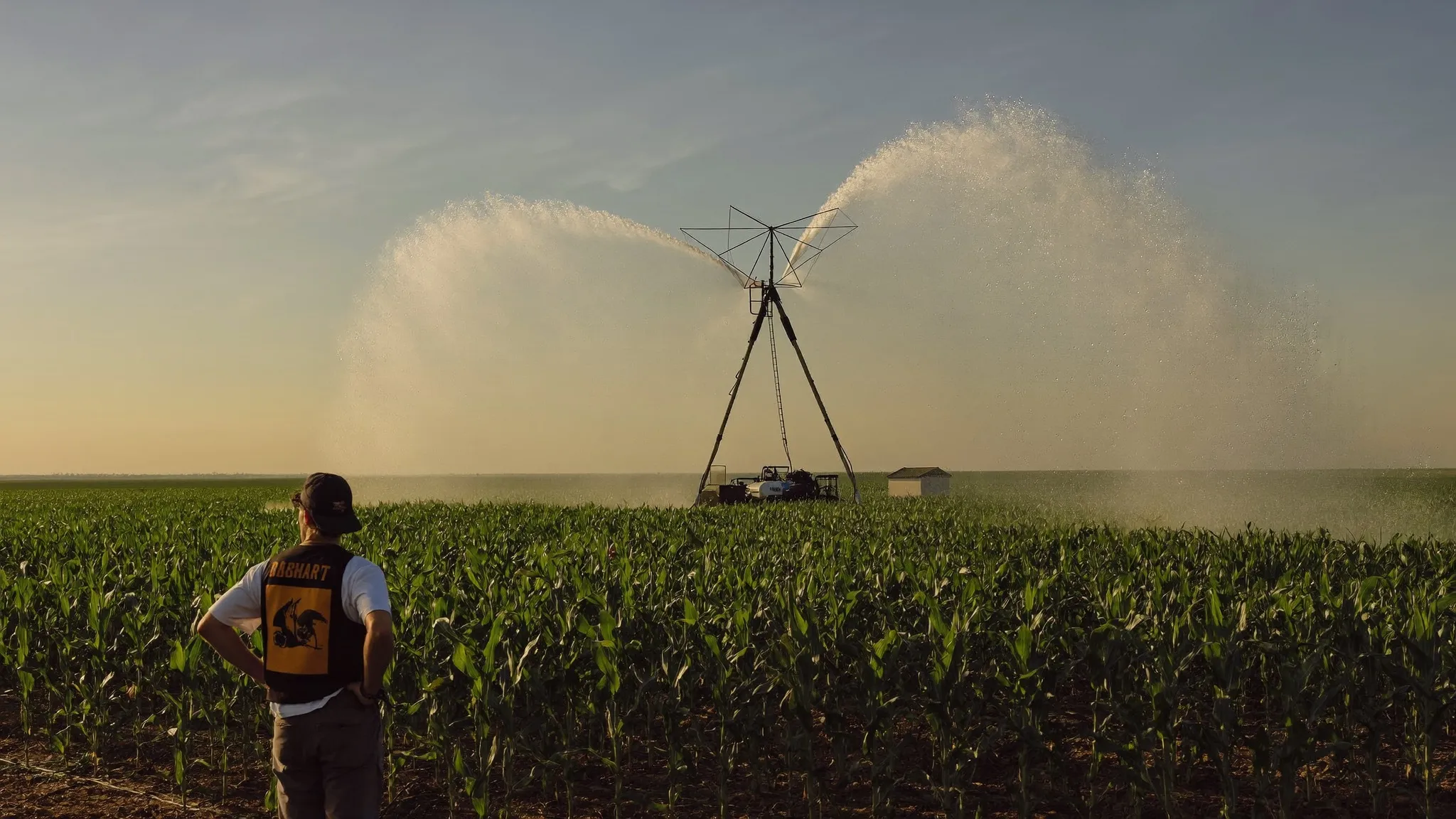
Center-pivot irrigation has been the standard for High Plains and western Corn Belt production for four decades, and the economics of installing one in 2026 look meaningfully different than they did in 2022. Capex on a complete quarter-mile system — pivot, pump, power unit, well work, and electrical — is running roughly 35 percent above where it was three years ago. Steel is settled higher, panel and controller electronics have absorbed multiple rounds of input-component cost pass-through, and contracted installation labor has been short the entire post-2023 period.
For producers weighing whether to add a pivot in 2026, that capex math is the conversation. The water-savings case for pivot over flood is the same as it always was; the question is whether the capital outlay at current prices still earns out, and how to finance it cleanly when it does.
Installed cost breakdown, 2026
A complete quarter-mile (typically irrigating roughly 130 to 135 acres of effective coverage) center-pivot installation in 2026 lands in roughly the following ranges, varying meaningfully by geography, water source, and field conditions:
- Pivot machine (tower, span, sprinkler package, controls): $75,000 to $95,000
- Pump and power unit: $25,000 to $45,000 depending on whether electric or diesel
- Well drilling and casing: $30,000 to $70,000 depending on depth and aquifer
- Underground supply pipe and trenching: $15,000 to $25,000
- Electrical service installation (for electric pumps): $10,000 to $35,000 depending on distance to nearest three-phase
That puts a turnkey installed quarter-mile system somewhere in the $155,000 to $270,000 range. The lower end is a parcel near existing electrical service with a shallow water table; the higher end is a deep well on a parcel that needs power brought in. The mid-range — $200,000 to $230,000 — is what most quarter-mile installs are actually pricing at in the spring of 2026.
Financing structure that fits irrigation
Generic equipment loans don’t fit irrigation cleanly. The payment structure that makes the asset earn out is one where repayment aligns to the irrigation season’s revenue — meaning seasonal payment schedules with the option to skip or reduce off-season payments, longer amortization than a typical tractor note, and underwriting that reads the water rights and well capacity as collateral the way a generic equipment lender will not.
Irrigation equipment financing programs typically structure 7 to 10-year amortizations with rates landing in roughly the 7 to 11 percent range as of mid-2026 for established producers. The seasonal payment option matters more than the headline rate for most operations: a structure with reduced January through April payments and full payments June through December lines up cleanly with the actual revenue rhythm of irrigated crops.
Before signing, run the proposed payment against a real-cost crop budget through a monthly payment calculator for farm loans at the exact rate, amortization, and seasonality the lender is offering. The pivot that pencils at a $25,000 annual debt service may not pencil at $32,000 — and the difference between a 7-year and a 10-year amortization on the same balance moves the annual payment by exactly that amount.
Payback period, by crop
The earn-out math on a pivot is the yield difference between irrigated and dryland production, multiplied by acres covered, valued at current commodity prices, against the carrying cost of the system. Rough 2026 ranges:
- Corn: irrigated corn in western Nebraska is commonly yielding 220 to 240 bushels against a dryland 150 to 170. The yield delta of roughly 70 to 80 bushels per acre at $4.30 corn is $300 to $345 per acre of irrigation premium. Against a $200,000 system covering 130 acres, the gross premium is roughly $39,000 to $45,000 per year — payback before financing cost is in the 4.5 to 5-year range, longer with financing.
- Soybeans: the irrigation premium on soybeans is smaller, commonly 8 to 12 bushels per acre. At $10 soybeans that’s $80 to $120 per acre — meaningfully thinner.
- Alfalfa: irrigation pays particularly well in alfalfa, where it enables a fourth or fifth cutting that dryland operations don’t get. The math runs comparably to corn but with more volatility tied to hay markets.
- Vegetables and specialty: payback is typically the fastest, often inside two years, but the operation profile is different.
The case for pivot in 2026 is strongest in corn-on-corn rotations on parcels where the yield delta is large and reliable. It’s weakest on soybean-heavy rotations where the premium thins.
Pivot versus drip in 2026
For row-crop production at scale, pivot remains the default — drip systems pencil better on water savings but install cost per acre is roughly double, and the maintenance load is meaningfully higher across a long-rotation crop history. Drip wins decisively on permanent specialty crops (orchards, vineyards, established berry production) and on parcels where water rights are tightly constrained and every gallon saved has real economic value.
For a producer adding capacity in 2026 on standard row crops with reasonable water availability, pivot is the answer. For a producer expanding into specialty production or working a parcel with a strict water cap, drip is worth the math.
The bottom line
Pivot capex is up, water rights are tighter, and the financing structure that makes the asset earn out is specific enough that the generic equipment lender is usually not the right conversation. The producers adding pivots in 2026 that earn cleanly are doing two things: matching the financing structure to the irrigation revenue rhythm, and running the real numbers against a stress-tested crop price before signing. The producers who skip either of those steps are the ones whose pivot decision becomes a problem rather than a return. A network of lenders that underwrite farm cash flow — and specifically the ones that understand irrigation — is the prerequisite for getting the structure right.