Buying farmland in 2026: down payment, term, and rate realities
What a serious farmland acquisition actually pencils at in 2026 — down-payment expectations, term structures, current rate environment, and the stress test every buyer should run before signing.
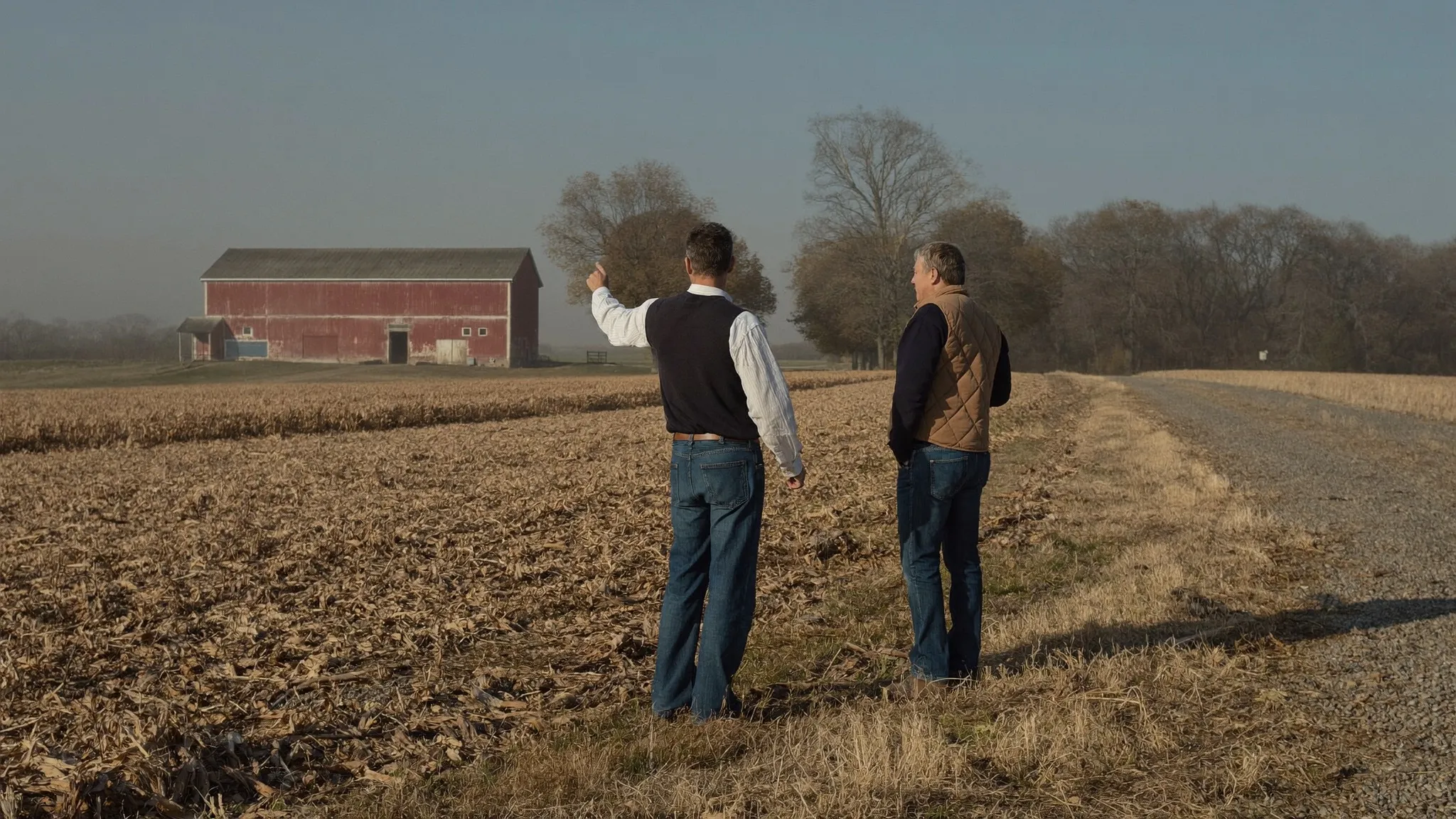
Farmland buyers in 2026 are operating in a market that has held up better than most observers expected coming out of the 2023 commodity price reset. Iowa values are still hovering near the all-time high of $13,200 per acre on top-quality ground. Institutional demand remains in the bid stack on every meaningful auction. And specialty farm credit — the category of lenders that underwrites farmland purchase against the soil, water, and operating tie-in rather than against the parcel as a generic real estate asset — has matured into a real product market with terms that compete favorably against community bank ag mortgages on the right deal.
For a producer or beginning landowner running real numbers on a 2026 acquisition, three things actually matter: down payment, term structure, and the rate environment as it sits today.
Down payment expectations
The down-payment ask on farmland in 2026 has settled into a relatively narrow band, and it varies less by lender type than most buyers expect. The variation is driven primarily by whether the acquisition has a clear operating tie-in.
- Contiguous expansion acres — ground that adjoins an existing operation and that the buyer has a credible plan to farm with existing equipment and labor — commonly carries down-payment requirements of 25 to 30 percent at specialty farm credit lenders.
- Standalone parcels — ground without an existing operating connection, including beginning-farmer first acquisitions — typically requires 30 to 40 percent down.
- Investment-style purchases — buyers acquiring with cash-rent intent rather than to operate themselves — commonly run 35 to 45 percent down.
The down payment is the lever that moves rate and term flexibility more than any other underwriting variable. A buyer with the cash to put 35 percent down typically gets meaningfully better pricing than the same buyer at 25 percent, and the option for a longer amortization or a longer rate-reset period.
Term structure
Farmland purchase loans don’t typically look like residential mortgages. The 30-year fixed isn’t the standard product, and buyers should be ready for the structure that actually dominates the market:
- Amortization periods commonly run 20 to 30 years, with 25 being the most common.
- Rate structures are commonly partially fixed — a 5, 7, or 10-year fixed-rate period at origination, then a reset to current market rates at the end of that window, with the amortization continuing. This is closer to a commercial real estate loan than to a residential mortgage.
- Payment frequency is usually annual or semi-annual rather than monthly, reflecting the cash-flow rhythm of farm operations.
The structure to watch closely is what happens at the first rate reset. A 7-year reset on a 25-year amortization means the loan resets to current market rates twice over the loan’s life. Specialty farmland purchase loans typically build in either a rate cap at reset (limiting how far the new rate can jump) or a clear repricing methodology — but generic community bank ag mortgages may not, and that’s a question to ask explicitly before signing.
Rate environment, mid-2026
Farmland loan rates in mid-2026 are landing in roughly the 6.5 to 8 percent range at the specialty farm credit lenders for strong borrowers, with community bank ag mortgages typically running 25 to 75 basis points wider depending on the relationship. FSA Direct Farm Ownership — when the buyer qualifies — is significantly cheaper, often in the high-4 to mid-5 percent range, but with the $700,000 cap (raised from $600,000 effective January 2026) and the longer FSA underwriting timeline.
The spread between FSA and conventional is wide enough that most beginning farmers and operators expanding under the FSA cap should be in conversation with their county office before they shop conventional. For acquisitions above the cap, the conversation moves to specialty farm credit or commercial banking.
The stress test that catches signing regret
Before signing on any farmland acquisition, the math should pencil at meaningfully worse commodity prices than today’s. The reasonable stress test in mid-2026:
- Run the math at $3.80 corn and $9.50 soybeans (versus the current $4.30 and $10.50 range)
- Add one full percentage point to the loan rate that’s on the term sheet
- Confirm the rented-acre cash-rent income from the parcel still covers debt service if the buyer’s operating cash flow is the marginal payer
If the acquisition pencils with positive cash flow at those numbers, it’s defensible. If it only pencils at current commodity prices and today’s rate, it’s a problem waiting for the next soft year.
Run the actual numbers through a monthly payment calculator for farm loans at the offered rate and term, then redo it at the stress-test scenario. The annual payment that fits cleanly at 7 percent looks different at 8 percent. The acquisition that cash-flows at $4.30 corn may not at $3.80.
When to walk away
Two situations call for walking away rather than restructuring the deal:
The seller’s price assumes a continued bull market. If the asking price only makes sense at current peak values continuing for the next decade, the buyer is paying the seller’s optionality. Patience usually pays better than aggressive bidding.
The acquisition only works if everything goes right. A deal that requires good yields, good prices, no rate moves, and no surprise input costs to pencil is not a deal — it’s a hope. The right acquisition has structural margin against a soft year.
Specialty farm credit lenders generally won’t approve deals that fail the stress test, but a determined buyer can sometimes find a lender who will. That’s not validation of the deal; it’s exposure.
The bottom line
Buying farmland in 2026 is harder than it was in 2022 — values are high, rates are higher, and the structural margin in any given acquisition is thinner. The buyers who are still acquiring well are the ones who matched the financing structure to the actual operation, ran the math against a realistic price floor, and walked away from the deals that only worked under perfect conditions. A network of lenders that underwrite farm cash flow and farmland correctly is the prerequisite. The math discipline is the part the buyer brings.