Beginning farmer financing in 2026: what FSA, specialty farm credit, and private lenders actually offer the under-10-year operator
The financing map for beginning farmers in 2026 — FSA Beginning Farmer programs, Down Payment Loan structure, specialty farm credit alternatives, and where private operating capital fits before the FSA backlog clears.
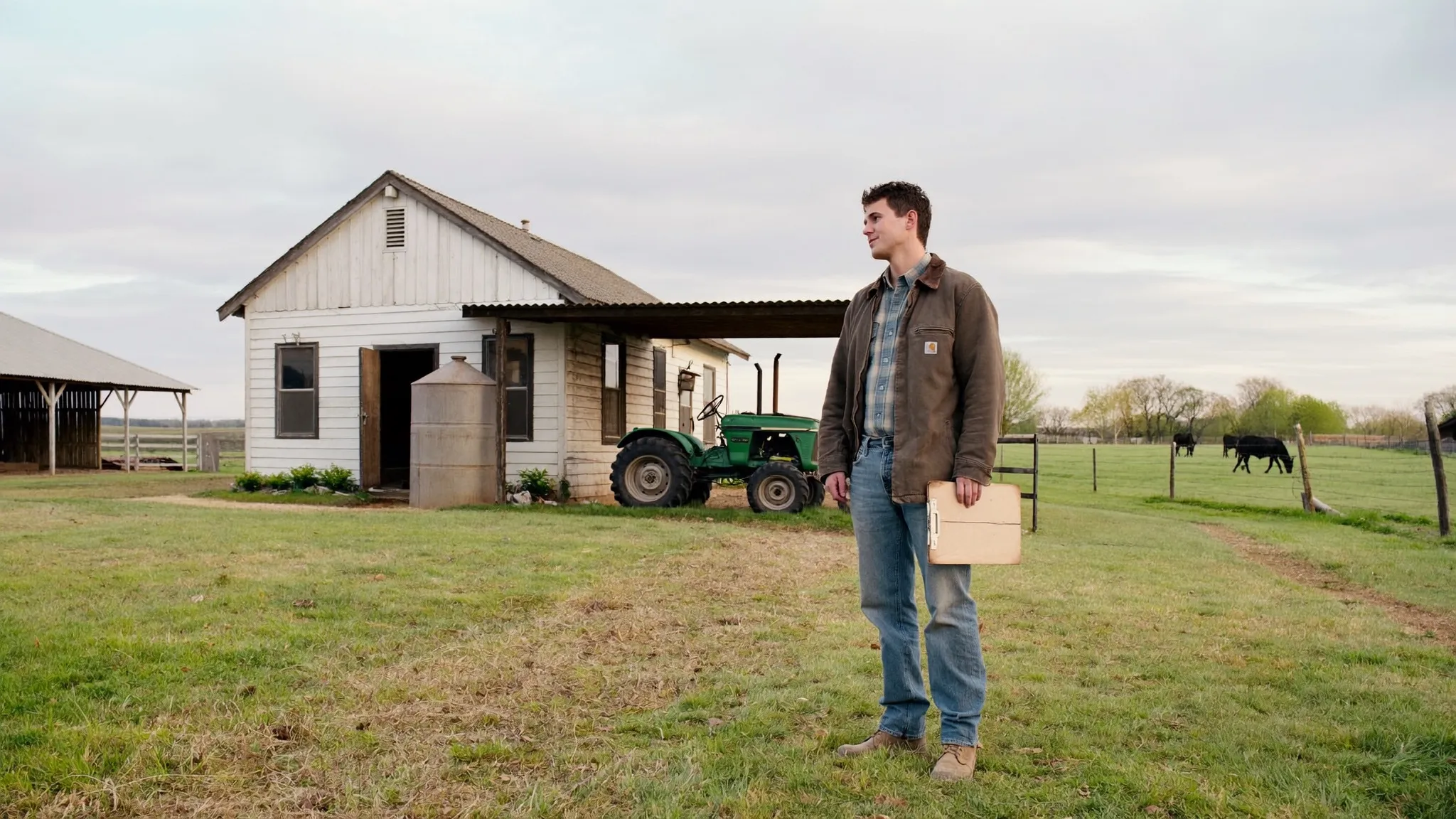
The financing menu available to a beginning farmer in 2026 is, in practical terms, the deepest it has been in a decade. FSA’s beginning-farmer set-asides remain in force across the Direct Farm Ownership, Direct Operating, and Down Payment Loan programs. Specialty farm credit lenders have matured into a real product market that increasingly underwrites new operators against the credentials and operating plan rather than against trailing balance sheets that don’t exist. Private specialist farm operating lenders are funding crop-year working capital for first-year producers in a way that even five years ago was effectively unavailable.
For an operator under the FSA 10-year beginning-farmer definition, the question in 2026 is not whether financing exists. It’s how to sequence the programs and lenders to build a balance sheet that supports the next stage of the operation.
The FSA Beginning Farmer set-asides
FSA defines a beginning farmer as an operator who has not operated a farm for more than 10 years. The agency holds a portion of its annual lending capacity specifically for this category, which means qualified beginning farmers commonly face shorter wait times for Direct program decisions than the general applicant pool.
Three FSA programs are particularly relevant for new operators:
Direct Farm Ownership Loan — for purchasing farmland — with a $700,000 cap (raised from $600,000 effective January 2026) and amortization up to 40 years. Beginning farmers commonly use this in conjunction with the Down Payment Loan structure to acquire first parcels.
Direct Operating Loan — for crop-year operating capital, equipment, livestock, and other operating costs — with a $450,000 cap (raised from $400,000 effective January 2026) and terms up to 7 years.
Down Payment Loan Program — specifically structured for beginning-farmer first acquisitions. The structure is a 45/5/50 stack: FSA funds up to 45 percent of the purchase price (capped at roughly $300,000), the buyer contributes at least 5 percent down, and the remaining 50 percent is typically financed through a commercial or specialty farm lender. The FSA portion carries a below-market rate fixed for 20 years.
The Down Payment Loan is structurally one of the most generous beginning-farmer programs in any sector of the economy. For a beginning farmer acquiring a $400,000 parcel, the stack works out to $20,000 down from the buyer (5 percent), $180,000 from FSA at the below-market fixed rate (45 percent), and $200,000 from a specialty farm credit lender at conventional terms (50 percent) — a financing structure that simply cannot be replicated through any combination of conventional lenders alone.
Where specialty farm credit fits
When the acquisition exceeds the FSA cap, or when the timeline for FSA decision pushes past what the deal can wait for, specialty farm credit becomes the practical answer. Farmland purchase loans from specialty farm credit lenders are increasingly written with beginning-farmer-aware underwriting — recognizing that a first-acquisition buyer with strong credentials, a credible operating plan, and an existing rental relationship on the parcel is meaningfully lower-risk than a generic real estate underwriter might price.
Specialty farm credit terms for a strong beginning-farmer borrower in mid-2026 commonly land in the 7 to 8 percent range on 25 to 30-year amortizations, with 5 to 7-year rate-reset periods. Down-payment expectations run 25 to 35 percent for contiguous expansion of an existing rental relationship, higher for purely standalone first acquisitions.
The specialty lender’s read of “beginning farmer” is meaningfully different from a community bank’s. A community bank often sees “no operating history” and declines. A specialty farm credit lender sees the same applicant and looks at the credentials, the operating plan, the soil type, the water rights, and the existing rental relationship — and makes a different decision.
Operating capital before the FSA decision clears
The structural challenge for many beginning farmers is timing. The FSA Direct Operating Loan is the right answer for crop-year operating capital on a beginning-farmer basis — but the application-to-funding timeline commonly runs 60 days or longer, and a beginning farmer trying to fund spring inputs in March cannot necessarily wait until May for a decision.
The bridge that increasingly works is a private specialist operating line for the first crop year, with a plan to migrate to the FSA Direct Operating product at the first renewal. Operating line financing built for row-crop and livestock operations on the private side is currently funding first-year producers at decision timelines in the 2 to 3 week range — meaningfully faster than FSA, at higher rates (typically 10 to 14 percent for first-year operators), but with structure that allows the producer to actually fund a 2026 crop.
The first-year cost is real, but so is the alternative — which is often deferring the operation entirely until the FSA decision clears. For beginning farmers with a defined first crop and a clear path to commercial viability, the trade-off frequently favors paying the higher rate for one year to establish the operation, then moving to the cheaper FSA structure at renewal.
The sequencing that works
The most common successful beginning-farmer financing sequence in 2026 looks roughly as follows:
-
County FSA office conversation first, regardless of where the financing ultimately lands. The agency’s beginning-farmer programs, eligibility for set-asides, and county-specific timelines are knowable only by talking to the actual loan officer who will work the application.
-
Down Payment Loan stack for the first acquisition when the program fits. The structural rate advantage is meaningful enough that it generally pays to wait through the FSA timeline if the acquisition can accommodate it.
-
Specialty farm credit for the conventional portion of the acquisition — and for any expansion above FSA caps in later years.
-
Private specialist operating capital for the first crop year, with a clear migration plan to FSA Direct Operating at first renewal once the operating history exists.
-
A relationship with at least one community ag bank in parallel, for the longer-term working-capital relationship that will eventually replace specialty product reliance as the operation matures.
Before signing any of these products, run the proposed payment structures through a monthly payment calculator for farm loans and stress-test against a softer year than the one currently in front of you. Beginning-farmer operations carry less margin against a difficult first year than mature operations — the financing structure should reflect that.
The bottom line
A beginning farmer in 2026 is operating in the deepest financing market available to new operators in decades, but the menu is sequential rather than substitutable. FSA’s beginning-farmer programs are the structural rate advantage that more than compensates for their timeline. Specialty farm credit fills the conventional portion of the stack. Private operating lenders bridge the first crop year. A network of lenders that underwrite farm cash flow and that understand beginning-farmer credit specifically is the prerequisite to navigating the sequence correctly. The producers who build sustainable operations in the next decade are the ones who use all of it deliberately, not the ones who default to whichever product they encounter first.